Loading...
Serving Somerville, MA and surrounding areas. (617) 634-5990
Clearstone Somerville Concrete is a concrete contractor serving Newton, MA with stamped concrete driveways, patios, retaining walls, and foundation work across all 13 Newton villages. We manage permits through the Newton Inspectional Services Department, have experience on the city's pre-1940 Victorian and Colonial homes, and respond to every inquiry within 1 business day.
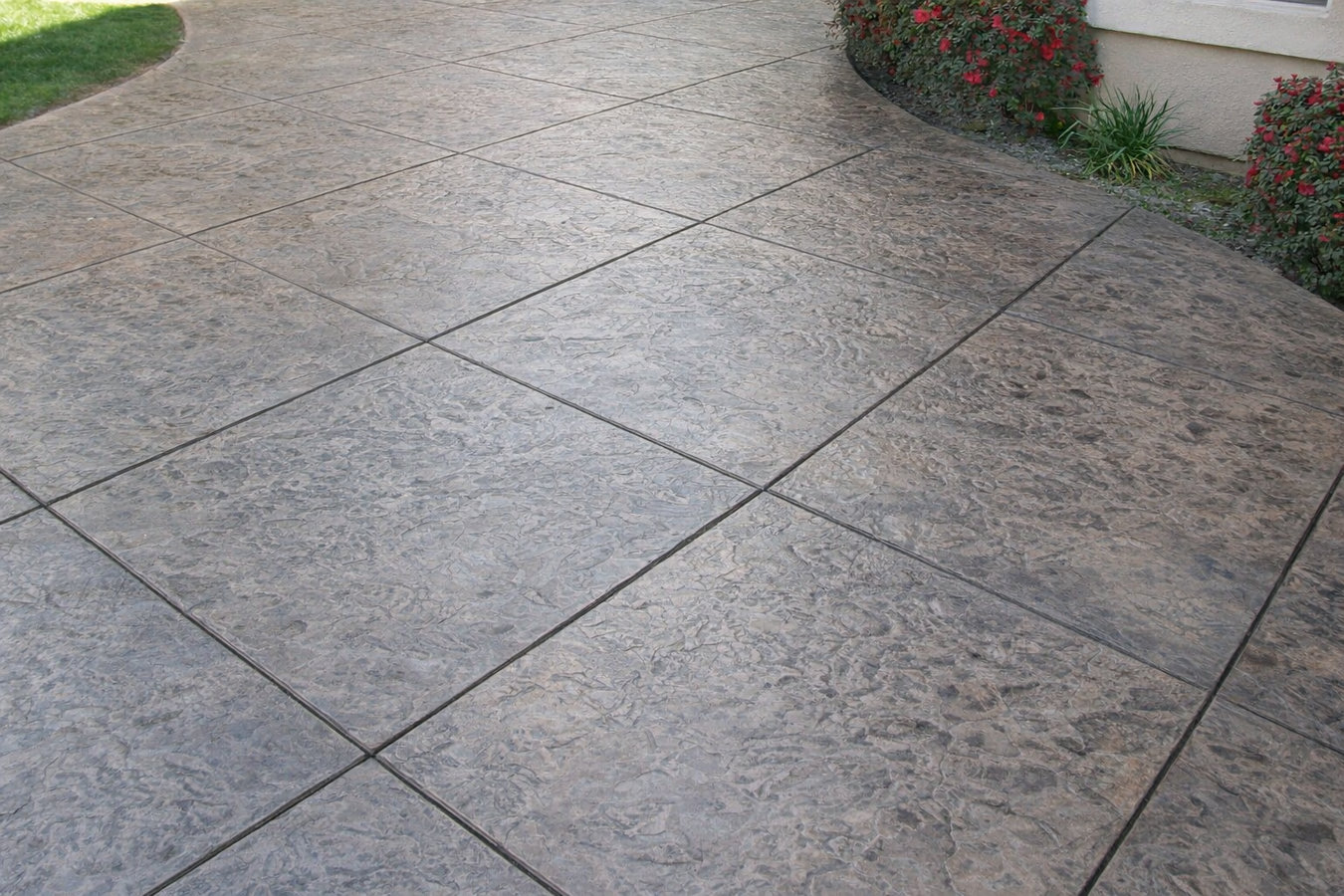
Newton homeowners invest in their properties for the long term, and a plain broom-finish driveway or patio often does not fit the scale and character of an older Colonial or Victorian home on a large lot. Our stamped concrete services deliver a finished surface that complements the home's architecture while holding up to Newton winters. We use properly air-entrained mixes and include a sealing schedule in every stamped project so the pattern stays sharp through multiple freeze-thaw seasons.
Long driveways on Newton's larger lots in villages like Waban and Chestnut Hill present a different set of challenges than a short city lot - more linear footage of concrete exposed to freeze-thaw cycling, more surface area to drain, and often mature tree roots that complicate excavation and base preparation. We assess root conditions, soil bearing, and drainage at the site visit so the driveway design accounts for all of it before a single cubic yard is ordered.
Sloped lots in Newton's villages frequently need retaining walls to create usable yard space, manage drainage, or stabilize grade near a foundation. Clay-heavy glacial soil in this part of eastern Massachusetts retains water and exerts persistent lateral pressure on walls that were not engineered for it. We pour poured-concrete walls with drainage aggregate cores and frost-depth footings, which keeps them from leaning or cracking after the first few winters.
Newton's older homes with large rear yards are ideal candidates for a concrete patio that extends the usable outdoor space. Many of those yards have mature trees with established root systems and uneven grades from decades of soil movement. We work around existing landscaping, account for root depth during base preparation, and pitch the finished surface to carry water away from the foundation, not toward it.
Newton's pre-1940 homes were commonly built on fieldstone or brick foundations, which shift, crack, and admit water as the ground freezes and thaws. We handle full foundation replacements on older homes and new poured foundations for additions, working within the constraints of existing structure and the Newton Inspectional Services permit process. Every foundation pour includes exterior waterproofing as standard practice on properties with clay soil.
Newton's housing stock is old and diverse. Most homes were built before 1960, and a substantial share date to the early 1900s or the Victorian era. Those homes sit on fieldstone or brick foundations in many cases, have long driveways on large lots, and were built when concrete specifications were a fraction of what modern cold-climate work requires. When we excavate on a Newton job, the base condition we find is rarely predictable. Clay soil, displaced fill from previous work, and root intrusion are common under the existing concrete.
The glacially deposited clay soil throughout eastern Massachusetts is a recurring issue in Newton. Clay holds water instead of draining it, which means moisture sits against foundations and concrete slabs far longer than it would in sandy or loamy soil. When that saturated clay freezes in December, it expands. When it thaws in March, it contracts. A concrete surface or foundation wall sitting in that environment without proper drainage and frost-depth footings will show damage within a few winters.
Newton's 13-village structure also means that site conditions vary significantly within the city. A job in Waban on a large lot with mature oak trees is a fundamentally different project than one in Newtonville on a tight lot near the commuter rail. A contractor who has not worked across Newton's villages will not recognize those differences until they are already on-site, which shows up in cost surprises or work that does not quite fit the property.
We pull permits through the City of Newton Inspectional Services Department, and we are familiar with their review requirements for residential concrete work, including the pre-pour inspection process for structural foundations. The crew works across Newton's villages regularly, from Chestnut Hill near Boston College to Auburndale closer to the Waltham border, and those two ends of the city have noticeably different lot sizes, housing styles, and soil conditions.
Commonwealth Avenue through Newton, known for the Heartbreak Hill section of the Boston Marathon, runs through some of the city's older residential neighborhoods where pre-war Colonials and large Victorians sit on lots with long front walks and driveways that need concrete at a scale you rarely see in denser suburbs. Newton Centre village is a useful reference point for the older, denser end of Newton's housing stock, while Waban and Chestnut Hill represent the large-lot single-family end of the spectrum.
We serve neighboring Waltham directly to the north, where similar pre-1960 housing stock, clay soil, and Charles River proximity create comparable concrete work patterns. Newton homeowners near the Auburndale and Waltham border often share contractors with their neighbors across the line, and the site conditions in that zone are consistent enough that we treat them as one continuous service area.
Call us at (617) 634-5990 or submit a request through the contact form. We reply within 1 business day to schedule a free on-site visit. We do not quote Newton projects over the phone because lot size, tree root conditions, and drainage requirements vary enough across the city's villages that an accurate price requires seeing the property in person.
We walk the full work area, assess existing base conditions, check drainage, and look at access for equipment and concrete trucks. You receive a written quote with all line items broken out. If the scope requires pumping due to access constraints, or if permit fees apply, those are included upfront so there are no surprises after you sign.
We submit the permit application to Newton Inspectional Services and confirm your start date once it is approved. Our crew manages all demolition, excavation, base preparation, forming, pouring, and finishing. The pre-pour inspection required by the city for structural work is scheduled before any concrete is placed.
After the pour we walk the finished work with you and review the cure window: at least 24 hours before foot traffic, 7 full days before vehicle use. For stamped and decorative concrete, we provide a written sealing schedule since re-sealing every two to three years is important for surface protection in Newton's freeze-thaw climate.
We serve all 13 Newton villages. Free on-site estimates, permits managed, and a written quote with no hidden costs. We reply within 1 business day.
(617) 634-5990Newton is a city of about 88,000 residents just west of Boston in Middlesex County, consistently ranked among the wealthiest communities in Massachusetts. What makes Newton unusual is its structure: rather than a single downtown, it is organized into 13 named villages, including Newton Centre, Newtonville, Chestnut Hill, Waban, West Newton, and Auburndale. Each village has its own character, its own commercial street, and its own mix of homes. Contractors who know the village names stand out from those who treat Newton as one uniform suburb.
The housing stock throughout Newton skews old and large. Most homes were built before 1960, with a significant share dating to the Victorian and Edwardian eras. Single-family homes in Waban and Chestnut Hill often sit on generous lots with mature trees, long driveways, and established landscaping. Closer to village centers like Newtonville and Newton Corner, you find denser two-family homes and converted single-families mixed in with the large colonials. The Massachusetts Turnpike and Route 128 define Newton's borders, and the Green Line runs through the city, connecting multiple villages directly to Boston.
We also serve Cambridge to the northeast, another densely built inner-ring community with similar pre-war housing age and clay soil characteristics. Newton homeowners who move to or from Cambridge often recognize that concrete work in both cities runs into the same freeze-thaw durability challenges and requires the same cold-climate specifications to last.
Durable concrete driveways designed and poured to last for decades.
Learn moreCustom concrete patios that extend your outdoor living space with lasting quality.
Learn moreDecorative stamped patterns that give concrete the look of stone, brick, or tile.
Learn moreSafe, level concrete sidewalks installed to local code and finished clean.
Learn moreSmooth, sealed concrete garage floors built to handle daily vehicle traffic.
Learn moreCustom decorative concrete finishes that add character to any surface.
Learn moreStructural retaining walls that hold soil, manage grade changes, and look sharp.
Learn moreInterior concrete floors poured flat, smooth, and ready for any finish.
Learn moreSlip-resistant, weather-ready concrete pool decks built for outdoor comfort.
Learn moreSolid concrete steps designed for safety and curb appeal at every entrance.
Learn moreEngineered concrete slab foundations poured right the first time.
Learn moreComplete foundation installation services for new construction and additions.
Learn moreHeavy-duty concrete parking lots built for long-term commercial use.
Learn moreProperly sized and reinforced footings that give every structure a solid base.
Learn morePrecision foundation lifting to correct settling and restore structural level.
Learn moreClean, precise concrete cutting for utility access, repairs, and modifications.
Learn moreServing these cities and communities.
From Chestnut Hill to Auburndale, we serve all of Newton's villages. Contact us today and we will schedule your on-site visit within 1 business day.